Dr Goh was one of the few analysts during the 1960s to have projected the possibility of China's economic rise by the 1990s. The government of the People’s Republic of China sought out Dr Goh’s expertise and appointed him as its economic adviser on coastal development and tourism in 1985. Dr Goh was the first foreigner to be appointed to such a role, a testament to the international recognition he had achieved for his accomplishments.
Dr Goh was the chairman of the Institute of East Asian Philosophies, which was formed in 1983 and had pioneered the Singapore government's promotion of Confucianism, even in 1990, when the institute was renamed as Institute of East Asian Political Economy (IEAPE), which served as a government think-tank on contemporary China as information on China at that point was limited.
Dr Goh was also responsible for projects that sought to improve Singaporeans' cultural and leisure lifestyle. He conceived the idea of setting up a bird park in Jurong in 1968. While in a World Bank Meeting in Rio de Janeiro, he had the opportunity of visiting a zoological garden and was mesmerized by the free-flight aviary over there. He felt that Jurong would be an ideal place where Singaporeans can relax in the lap of nature. In December 1968, Jurong HillÂ’s western slope was selected as the location of Jurong Bird Park, which was built at an investment of $3.5 million, excluding the cost of land.
In 1973, Dr Goh observed that it was "a scandal" that Singapore had no symphony orchestra, and he not only paved the way for the Singapore Symphony Orchestra (SSO)'s formation in 1979 but also secured for the orchestra a performing home in the Victoria Concert Hall. On 19 May 1978, the Singapore Symphonia Company Limited was set up to facilitate the setting up of the SSO. To ensure a long-term financial base for the orchestra, an Endowment Fund was created almost immediately. On securing the approval of the Cabinet for SSO's formation, Dr Goh said in an interview: "The PAP is supposed to be very hard-nosed, but I had little difficulty in persuading my colleagues... We believe that there's more to life than making money and that the orchestra would be worthwhile as it would raise the standard of culture of Singaporeans."To ensure a strong Singaporean component in the orchestra, Dr Goh set up music scholarships from the very beginning, to benefit promising young Singaporean musicians who could join the SSO upon graduation. The Public Service Commission administered this scheme in collaboration with the SSO for many years, sending up to eight scholars abroad annually. Today, due to Dr Goh's far-sighted vision, there is a good number of Singaporeans in the SSO's midst.
On 24, 25 and 26 January 1979, enthusiastic music lovers ranging from government ministers to young students streamed into the Singapore Conference Hall for the inaugural concerts of the Singapore Symphony Orchestra, and Dr Goh attended the second night of the performance. Ever passionate about classical music, he was to be seen at almost every SSO concert from then on until the early 1990s. After Victoria Memorial Hall was re-opened as Victoria Concert Hall on 1 October 1980, Dr Goh would always be seen seated in the first row of the balcony at SSO performances.
The Singapore Zoological Gardens was opened by Dr Goh in June 1973. He backed the construction of the Kreta Ayer People's Theatre in his constituency as a venue for Chinese opera performances. He also introduced rugby in the Singapore Armed Forces and later in schools. In recognition of his role in promoting the sport, the Schools "C" Division Cup is named after him. Impressed by an oceanarium in the Bahamas, he contacted the Sentosa Development Corporation and persuaded them to have one, thus Underwater World Singapore opened in 1991.

Dr. Goh Keng Swee
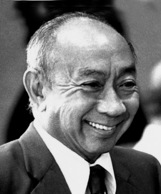
Singapore's Economic Architect
Search This Blog
Resources
- Tribute to the late Dr Goh Keng Swee by Ms Ho Peng, Director-General of Education
- Prime Minister Lee Hsien Loong's eulogy for Dr Goh Keng Swee
- What are Singaporeans suggesting?
- In Memory of Dr Goh Keng Swee
- The Architect of Singapore's Prosperity
- Dr Goh Keng Swee : His work his passion
- Complete Report - Dr Goh Keng Swee : The Passing of a Singapore Titan (St 15 May)
No comments:
Post a Comment